
Spray foam
Open-cell spray foam
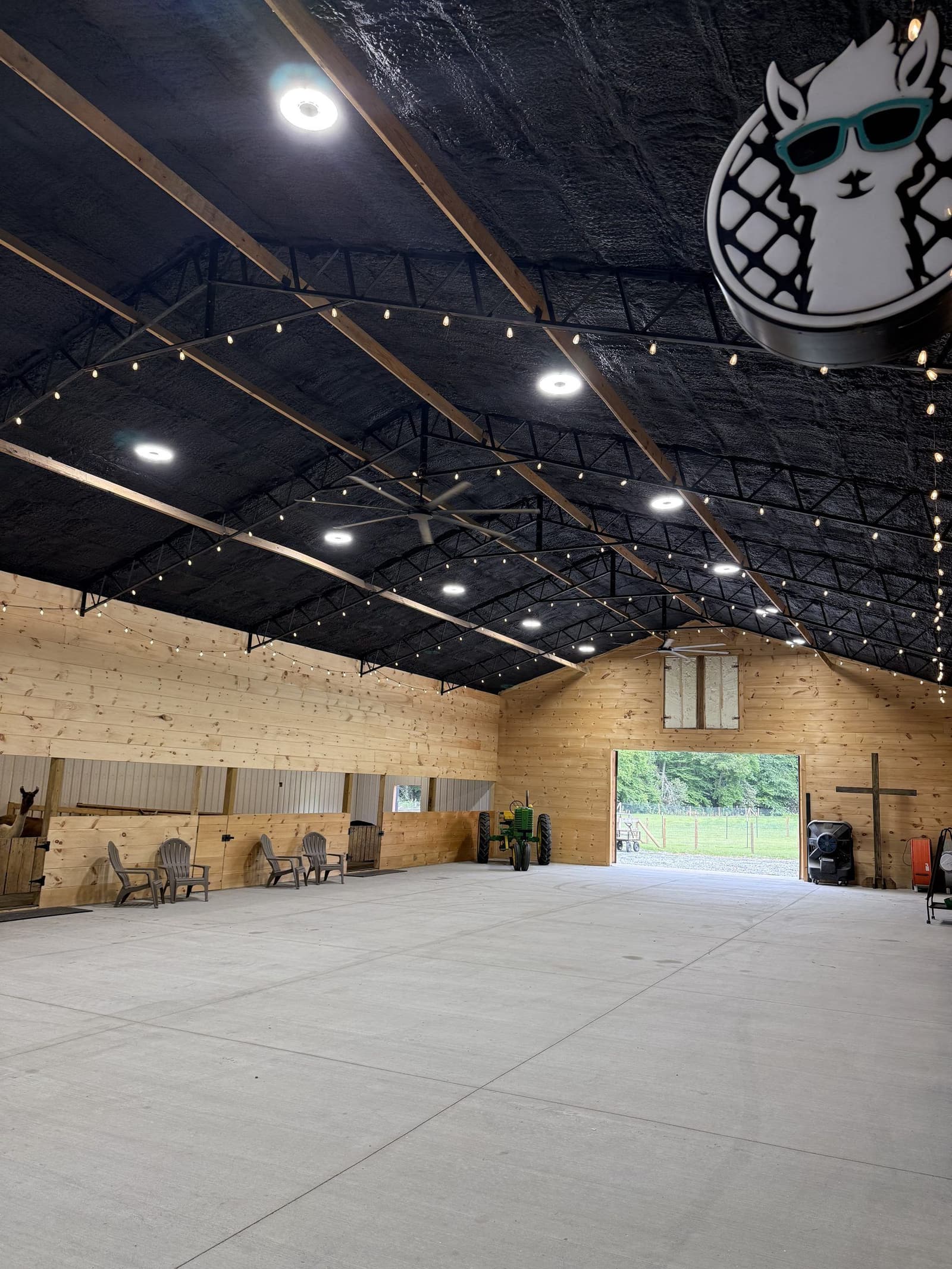
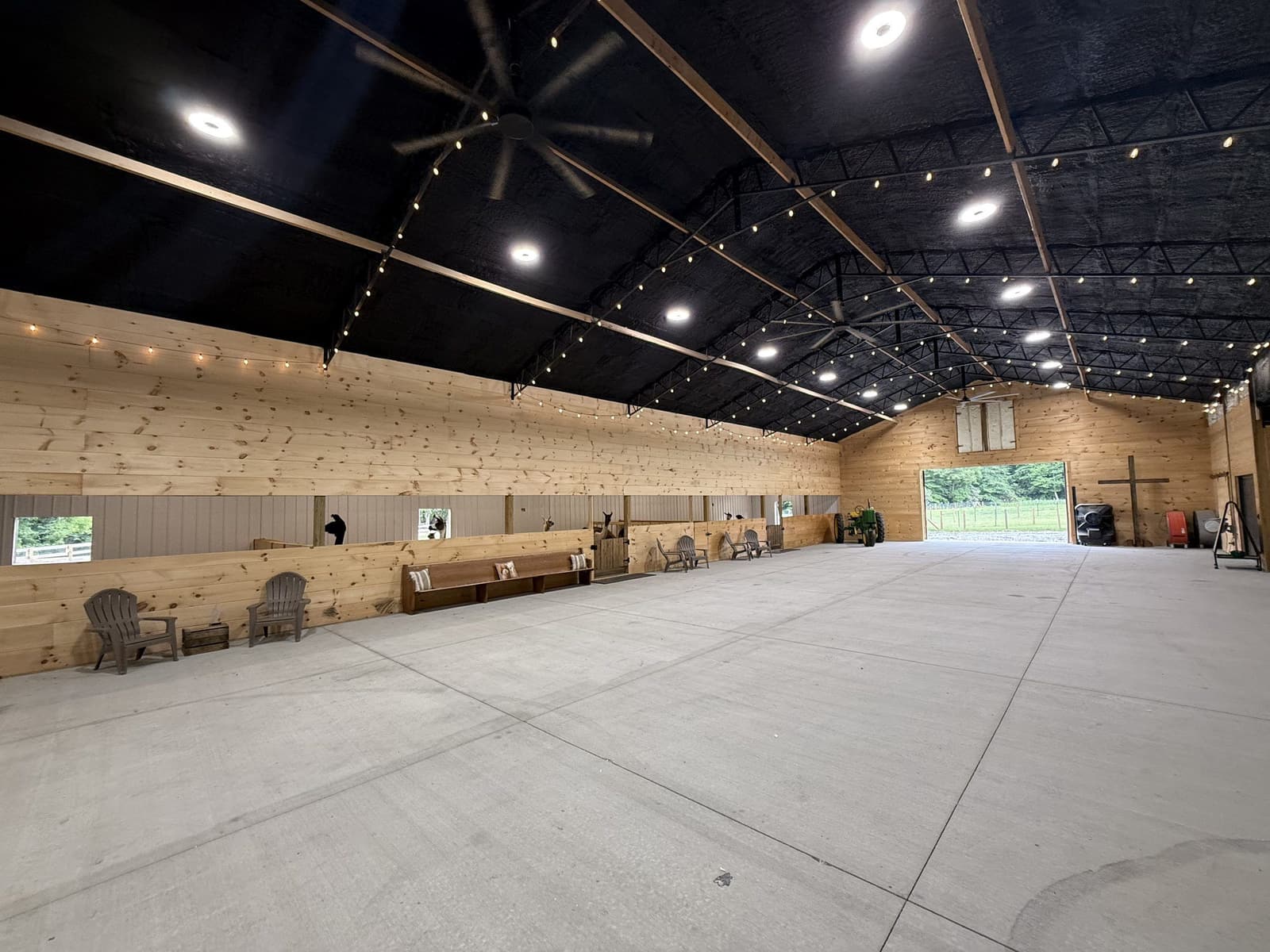
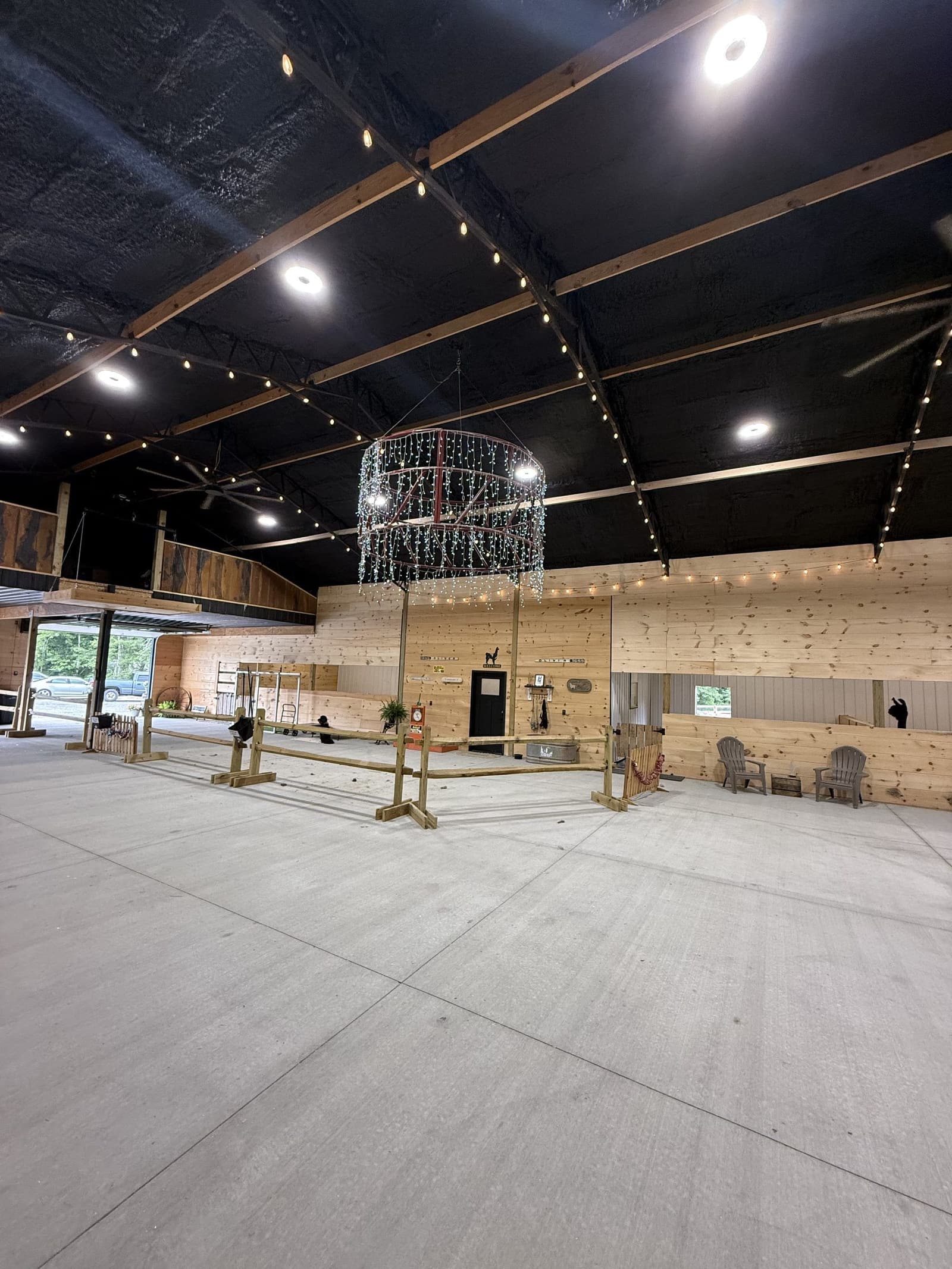
The spray foam we use on custom roofs, vaults, gables, and the odd bays a batt cannot fill. It air-seals the cavity as it insulates.
Complimentary REScheck A complimentary REScheck is included with every spray foam house. It is the energy code compliance report for that house.
Passed insulation inspection guarantee We guarantee your insulation passes inspection. If it does not, we'll make it right.
How it works
On a very high-end home, open-cell is the spray foam we put on the roofs, vaults, gables, bands, and cantilevers. It leaves the gun as a liquid and rises to fill the bay, the odd angle, and the gap a batt would have to be carved around. It air-seals the cavity as it insulates, which batts alone cannot do.
It is the lighter of the two foams we spray, commonly about 0.5 to 0.8 pounds per cubic foot. Use it where the assembly wants a full fill and an air seal, and does not need the foam itself to stop vapor. At ordinary thicknesses it is an air barrier and it stays moisture-permeable.
The Spray Polyurethane Foam Alliance publishes typical open-cell R-values of about R-3.6 to R-4.5 per inch. We size the pass to the plans and the code on the permit, not to a slogan.
How this work lines up with the North Carolina code is on What we go by.
Why this detail
- Fills irregular bays, tray ceilings, and the corners a custom plan creates
- Air-seals and insulates in one pass
- A lighter fill across large attic and wall volumes
- A continuous shell, ready for the drywall crew on the same schedule
The shell
Best return for your budget
Let CDI figure out the best return for your situation. Is it better to go all foam, or foam in the roof and batts in the walls? We treat every house as if it were our own, with our knowledge and your budget.
From the houses
What they told us.
“My power bill is $83 a month.”
“There are no more cold spots in my house.”
Field photos
Questions on this work
Where do you use open-cell instead of closed-cell?
Where the house needs a full cavity fill and an air seal, and the assembly does not need foam to act as the vapor retarder. Closed-cell is the other tool: denser, higher R per inch, and the one we use where water and vapor drive the detail.
Does open-cell replace air sealing?
It air-seals the field of the cavity. Penetrations, chases, and the attic hatch still get sealed on purpose. Foam and air sealing are one scope, not two trades guessing at each other.
Related
Get a quote
Estimate
How to get your price
- 1. Reach us your way Call (828) 376-3710, upload your plans, or send the request form.
- 2. We talk it through We make sure we know exactly what you want.
- 3. You get your price We'll already have it priced.
Send us your plans and we'll give you a free estimate. Final pricing is set after a field measure.
Estimate
Ready for a price? Call, send plans, or ask online.
Mon–Fri 8–5, call anytime for a return call